Molly writes:
“When the war was over we got a good NEW car.”
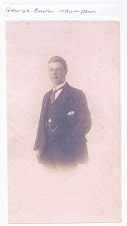
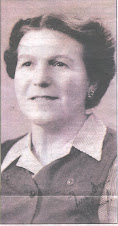
But a lot more than that happened. Badens father, George, had been a Justice of the Peace in the years 1930 to 1933. At this time all county Benches in England and Wales included at least one women magistrate, but Borough Benches were generally all male. There was a move to appoint more women to the Bench, and towards the end of the war Molly had been approached to become a Justice of the Peace for New York.
Molly really did not feel she had the time, but once war ended, and she found out another woman she knew, Mrs Ramshaw, was going to accept the position for Percy Main, she agreed and was appointed Justice of the Peace on 31 January 1946. She served until she resigned on November 11, 1970. This would have been around the time that Baden became very ill, and started to required nursing at home.
Becoming a JP meant she was asked to join the Committee of the Lady Mayoress along with Mrs Ramshaw, and they became quite good friends for many years.
In 1949 just after the National Health Service was launched she was asked to start up a Baby Clinic in the YMCA at New York. Each Thursday afternoon, mothers brought in their babies to be weighed and examined by a qualified Nurse. Molly assisted the Nurse and sold formula baby milk. On opening day the Welfare Doctor who was in charge was very sceptical and shrugged his shoulders saying “I give it a month”. However, there was great demand from mothers wanting advice and reassurance from the nurse and the clinic ran for years. Molly was involved until 1955.
That is the end of Molly’s memoirs, I have no more notes on her later life, however, there are many family members alive today who still remember her and can fill in information on parts of her later life. Meg listed for me some of her achievements in later years:
In 1953 Molly was Captain of the Ladies section of Tynemouth golf club
In 1954 she and Baden started to keep bees.
In 1956 she founded the TG Collingwood Guild, which met at St Aidens church in Moorhouses, North Shields.
In 1958 Baden and Molly retired from the butchers business and moved to the bungalow at 1, Simonside, Old Hartley. This was the year they went with the Bee Keepers Association to Rome and met the Pope.
In 1960 Molly started fund raising for ARC.
In 1980 as she became less mobile she began to crochet cake frills to sell as a fundraising item for ARC and then in 1984 for the Lifeboats Association.
In 1989 she decided to give up her driving licence due to increasing disability. By October 1989 she had made and sold 117 cake frills.
I remember her as strong, and determined, invincible, even when she was nearing the end of her life, but until I read her story in her own words, I did not realise how far she had come from her childhood at the beginning of the last century. Its been a privilege to write these chapters, I hope you enjoy reading them.
Posts tonen met het label Molly's Tale. Alle posts tonen
Posts tonen met het label Molly's Tale. Alle posts tonen
zondag 29 juni 2008

zaterdag 28 juni 2008
Molly's Tale Chapter 11 - Molly's charity work and war effort
Molly’s car was in demand, and around 1936 she was asked to join the Ladies Sewing club. The club made babies layettes, operation stockings and maternity gowns for the Princess Mary maternity Hospital in Newcastle. Molly would go once a month to the hospital with Aunty Mart, Uncle Peters wife (a Londoner) Dad Elliott’s half brother. (I cannot find any reference to Uncle Peter in the family tree so I am not sure if this was Martha Todds husband. Martha Todd was Molly’s fathers half sister). The two of them collected bundles of fabric to make up into baby clothes, or to hem batches of two dozen napkins. Molly kept the sewing machine in the wee alcove under the stairs so whenever she had time she worked on this sewing. She did this work for about two or three years, but as Molly herself wrote:
“War broke out and we had sheep on the golf course and now we had Jess the sheepdog.”
It’s a bit cryptic, but the sheep kept the grass short, as well as getting fattened up for the butchery, and Jess was used to drive the flock from the golf course in Tynemouth up to New York to slaughter.
Molly had herself joined the golf club just before war broke out but although she won her first cup at Hexham that year, she gave up golf during the war years. She writes:
“Baden still managed his golf but I never seemed to have time with all the activities in new York.”
She became deeply involved in organising a lot of wartime activities in the area. This was probably a combination of Molly’s hard working attitude and unquestioning capacity to serve others and the fact that the Thompson’s still had the only phone in the village. Everyone called to use it, or ask one of the Thompson’s to use it for them. Eddies Thompson’s garage located behind the butchery also used this phone, and Molly would have to take all the calls for Eddie, then run out with messages to him in all weathers.
Just before the war in 1938 she was involved in setting up the YMCA in New York, even helping whitewashing the walls along with the Adie Bros, who had volunteered their services. She cooked the dinner for the opening ceremony and helped run the club until about 1950.
By 1940 she had helped set up the New York knitting party and the New York Branch of the Red Cross. These two organisations continued all during war. Funds were raised by running a regular “Housey” meeting ( sort of Bingo) in the upstairs Concert Room at the Working Mens club.
The two organisations met every Monday in Molly’s front room, having a Red Cross meeting one week and the knitting party the next. The purpose of the knitting party was to provide every homecoming soldier with a pair of home knitted socks. The wool was bought from the “Housey” funds, and the women were very good knitters.
Throughout the war Molly and the Red Cross organised Friday night dances in the School and Working Mens Club. Molly lent their piano to the school but still had to pay a small fee for the use of the School Hall. The dance closed at 10 o’clock but the lady organisers had to sweep the floor before leaving.
In 1941 Molly became the war savings organiser for New York and in 1943 started a Branch lending library in New York School. It was part of North Shields Library. The library cards were all kept in a box at Pretoria House and a Librarian from North Shields called for them every week, on her way to open the Branch.
The war was a daily presence in New York. The Thompsons had a brick air raid shelter built in the garage yard, and the three children slept on bunks while the raid was overhead. Molly often told me that she would be under the stairs during air raids, I think this was so she could keep busy, knitting or sewing. Baden refused to move out of his bed, and a few times when there were big raids, all the windows would blow in. Molly would have to go upstairs when she heard the "All Clear" siren and sweep the broken glass off Baden as he lay under the covers.
Chapter 12
dinsdag 17 juni 2008
Molly's Tale Chapter 10 - Learning to Drive

The first car owned by the Thompsons was a Bull Nosed Morris; they bought it round about 1933-1934. Molly remembers that it cost 10 pounds, which was quite a bit of money in those pre-war days. It was in quite good condition and was a two seater. Meg, her daughter, remembers going on holiday to Scarborough. Molly drove, Meg sat on Grandma Elliott’s knee in the passenger seat, and Bill on the back of the seat will this legs round her neck. Joan and Jack travelled down by train with the luggage. It meant that they had a car to tour in whilst on holiday – and Joan and Jack sat in the “dickie” (the boot) on “crackets” (stools) with umbrellas. If it rained too hard they all climbed inside.
But before they were able to go on holiday Molly had to learn to drive. She was taught to manoeuvre by Uncle Eddy, in the bit of spare ground between the back of the butchers shop and Eddy’s workshop. For the rest she chugged along the lane then onto the Front Street and back to the shop.
The car was useful, as Baden sold meat from the butchers van at various places in the area. On Friday nights he would be outside “C” Pit at Backworth selling meat to the miners coming off shift with their pay packets. Molly’s first motoring venture was to bring more sausage to him there one night. It was getting dark, and going up there she didn’t get into top gear, but once she arrived, Baden turned the car round and put the car into 2nd gear running alongside her, as it was uphill all the way home, and she got home in top gear.
As her driving improved, Molly was able to collect the frozen meat from North Shields sidings. Once the war started, and their butchers assistant, Micheal was called up, Molly always spent Tuesday morning delivering orders to the districts which did not get the van until Wednesday.
There was also a super story of the time Molly had to go up to Hill Top Farm to collect another pig for slaughter as the butchers shop was very busy, and no one else could go. She had the butchers apprentice with her, and between them they caught the pig, and put it in the back, with the apprentice sitting on top of it, and drove it back to the shop to be butchered. I cannot imagine how noisy the pig would have been!
The car was also used for family outings, and not only the trip to Scarborough. On Sundays they often went to Tynemouth sands and Bill would put the tent on the running boards at the side. When they got to the beach Bill sat in the corner of the tent with his bathing costume on. He hated coming into the open.
With the family on the beach Baden would come from the Golf Club for a bit of lunch, then pop off back again for more golf. Often Molly would take the children home, feed them, and put them to bed, then collect Baden from the Golf Club.
Meg, Molly’s daughter, remembers on one trip back from the beach they passed two tramps pushing an old pram. Meg remembers that the woman looked quite young. Molly gave them all the picnic that hadn’t been eaten and the two tramps were very grateful. It made a lasting impression on Meg, but its strange now to think people then could have been so desperate, before the advent of the Welfare state, I suppose.
This first car was eventually replaced round about 1938 by a very good Wolsley. The family were able to use it for a couple of annual holidays, until war rationing limited the petrol available and holidays were no longer possible.
dinsdag 10 juni 2008
Molly Tale Chapter 9 - Living above the shop

Molly and Baden spent a few happy years at Hawthorne Gardens in Murton. But as Charlie and Eddies building business expanded, they began developing Links Avenue in Whitley Bay. Grandfather and Grandmother Thompson and their unmarried family moved into no. 144 Links Avenue, and when Uncle Charlie got married he moved into no 156 Links Avenue. That left the living quarters of Pretoria House at New York empty, so Molly and Baden moved in above the shop. At the time of the move Meg was 6 months old. Molly writes that as a baby she hated the change and cried every time the pram turned into the yard at New York. Once they moved in Charlie was able to start alterations, living conditions did improve and it was not so dreadful to live there again.
All the time Molly had been married, She had been paying an insurance on Baden that his mother had taken out originally. Grandmother Thompson took the repayments automatically out of Molly’s shop wage. This insurance matured, and, although Molly had other plans for the money, Baden used it to buy the big green meat fridge. Installation meant taking the wall between the shop and the back shop away, which was a terrible mess and upheaval, but once installed, the fridge was a great help, and making pies and pasties was no longer a necessity.
Pretoria House was large and accommodated a lot of people, however, it brought a huge amount of work with it. Molly's sister Louie lived with Molly and Baden, and Molly had a live in household help; a lady called Emily Barnfather. Eddie and Granddad Thompson ate their midday meal at the butchery, and Molly writes,
“I seemed to do nothing but cook and wash dishes”.
Granddad Thompson came up from Whitley Bay on the early bus and ate breakfast with them too, and Molly had a struggle getting the kids ready for school in the mornings, as well as cooking breakfasts on the gas stove out in the washhouse.
Each Monday morning a man called in from Broughts in North Shields and Molly placed an order for most of the shopping with him, which was delivered the next day. Anything else Molly needed she got from the Co-op next door.
Managing the spring cleaning was a major chore for Molly, accustomed to her life at Backworth where her whole time was spent on the household. Here she needed get the cleaning done in an spare hour or two though the day when she was not needed in the shop.
When Emily left to get married, a customer asked if they wanted anyone to help in house and that’s how Edna Stobbart moved in.
maandag 2 juni 2008
Mollys Tale Chapter 8 - Hawthorne Gardens
Baden and Molly were both employed by Baden’s father, and they did not have much money or time off. In order to help furnish the new house, Molly’s mother-in-law Mattie went to local house sales to pick up furniture here and there. Molly did resent this interference, especially as the emphasis was on usefulness and good value. The big sideboard with the ugly gargoyle carvings which always stood in the living room was one of these purchases, but happily the bedroom suite was new and I remember her pride in the bedroom furniture.
I think they must have been very happy in the house in Murton. Little Jack often cycled to visit on his bike, and Louie and Norah always visited on Sundays. Molly and Baden had a lovely Collie dog called Pat and he would take the children back down the road to the Wheatsheaf Public House to catch the bus home.
It was while Molly and Baden still lived at Murton that Baden took up golf, and he cycled down to Tynemouth golf club at every opportunity. The Clubhouse was his refuge when Molly was in labour with both Bill and Meg, he would wait there until everything was over, and he got the phone call to come home. There was not much time for golf in the early years for either of them, but they both enjoyed the sport and were members of the golf club for many years.
Baden’s sister Eleanor was still unmarried, but courting Bill Stewart. She lived at Pretoria House with the family in New York and ran the girl guides group. Molly was asked along on one of the annual camping trips. Uncle Eddy took the whole group, plus Eleanor and Molly with a three year old Joan, in his lorry up to the Farm at Rock, near Alnwick. The farm “Rock Mill” was run by Eleanor’s Aunt Mary and Uncle Bill Reed. It must have been a very uncomfortable trip in the open on the back of the lorry. Molly was taken along to do the cooking for the girl guides, whilst Eleanor took the guides on long hikes in the country.
The guides slept in an empty byre whilst Joan and Molly had a room in the Farm House. The cooking was done over a camp fire with a brick surround which was set up by Uncle Bill, and the farm supplied milk and eggs. Joan had a great time, running all over to find sticks for the fire. It sounds like the fore runner for the modern barbecue, but Molly does not write about the trip with much fondness, again I think it took her out of her comfort zone.
When Molly had been in Hawthorne Gardens for three years Baden arranged for her to have lessons in making Cornish pasties and pies from an old lady who ran a pie shop in Bertram Place in Shields. She made her own pies, but got her meat from Thompson’s Butchery. That summer was particularly hot, and as there was no fridge in the Butchery, the Thompson’s needed to make pasties to clear up the meat, mostly breast of lamb. Once Molly got trained and into the swing of things, she was making up to 200 pasties at a time, depending on how many scraps of meat needed to be processed.
Molly became pregnant with her second child, Bill, and her sister Louie came to stay to help make the pies and later help with the baby. Molly also had the help of Mrs Turner, a midwife who took extra jobs on to help support her two boys.
Molly's house had a garden, and they had a hen house. Once in the run up to Christmas, Baden bought two dozen cockrels to be fattened up. Molly writes:
I think that when she was younger, it never occurred to Molly to ask for payment for the extra value she brought to the business. It’s not even clear whether Louie was paid for pie making, when she came to help Molly out when she was pregnant.
Chapter 9
I think they must have been very happy in the house in Murton. Little Jack often cycled to visit on his bike, and Louie and Norah always visited on Sundays. Molly and Baden had a lovely Collie dog called Pat and he would take the children back down the road to the Wheatsheaf Public House to catch the bus home.
It was while Molly and Baden still lived at Murton that Baden took up golf, and he cycled down to Tynemouth golf club at every opportunity. The Clubhouse was his refuge when Molly was in labour with both Bill and Meg, he would wait there until everything was over, and he got the phone call to come home. There was not much time for golf in the early years for either of them, but they both enjoyed the sport and were members of the golf club for many years.
Baden’s sister Eleanor was still unmarried, but courting Bill Stewart. She lived at Pretoria House with the family in New York and ran the girl guides group. Molly was asked along on one of the annual camping trips. Uncle Eddy took the whole group, plus Eleanor and Molly with a three year old Joan, in his lorry up to the Farm at Rock, near Alnwick. The farm “Rock Mill” was run by Eleanor’s Aunt Mary and Uncle Bill Reed. It must have been a very uncomfortable trip in the open on the back of the lorry. Molly was taken along to do the cooking for the girl guides, whilst Eleanor took the guides on long hikes in the country.
The guides slept in an empty byre whilst Joan and Molly had a room in the Farm House. The cooking was done over a camp fire with a brick surround which was set up by Uncle Bill, and the farm supplied milk and eggs. Joan had a great time, running all over to find sticks for the fire. It sounds like the fore runner for the modern barbecue, but Molly does not write about the trip with much fondness, again I think it took her out of her comfort zone.
When Molly had been in Hawthorne Gardens for three years Baden arranged for her to have lessons in making Cornish pasties and pies from an old lady who ran a pie shop in Bertram Place in Shields. She made her own pies, but got her meat from Thompson’s Butchery. That summer was particularly hot, and as there was no fridge in the Butchery, the Thompson’s needed to make pasties to clear up the meat, mostly breast of lamb. Once Molly got trained and into the swing of things, she was making up to 200 pasties at a time, depending on how many scraps of meat needed to be processed.
Molly became pregnant with her second child, Bill, and her sister Louie came to stay to help make the pies and later help with the baby. Molly also had the help of Mrs Turner, a midwife who took extra jobs on to help support her two boys.
Molly's house had a garden, and they had a hen house. Once in the run up to Christmas, Baden bought two dozen cockrels to be fattened up. Molly writes:
“Baden had himself a evening suit measured at “Pearson’s”, I think. I never saw
a penny of that, and had to pluck 2 dozen birds before Christmas.”
I think that when she was younger, it never occurred to Molly to ask for payment for the extra value she brought to the business. It’s not even clear whether Louie was paid for pie making, when she came to help Molly out when she was pregnant.
Chapter 9
maandag 26 mei 2008
Molly’s tale Chapter 7 - married life
The five months Molly and Baden lived in Whitley Bay must have seemed like an extended honeymoon on the one hand, but the reality was they were there in order to hide Molly’s advancing pregnancy. If she had stayed in Backworth; at No 10 Northumberland Terrace; the whole neighbourhood would have known the marriage had been unavoidable. The street in Backworth was home to several members of Molly's father's extended family, as well as many of his colleagues from the Colliery.
Dick Mowat and his family lived at No 1; he was Company Treasurer, and presumably Henry’s superior. Other members of the Mowat family lived at No 3 and No 8, and were deputy supervisors. Henry’s stepfather and two step sisters lived at No 5, Another half sister Lily, was married to Henderson Gibson, manager of the Eccles/Maude Pit, and lived next door at no 11.
I don’t think she would have been able to go back home on a visit during this time, and she writes that little Jack, who was only four, went to Henry’s office at the Colliery to ask for sixpence for the bus to go and visit Molly in Whitley Bay. The young children must have missed her terribly.
The peace of Whitley Bay, and the lying in at Princess Mary’s Maternity Hospital came to an abrupt end when Molly left hospital to move directly into Pretoria House in New York with the Thompson family. The house and business were constantly busy; The house would have been full to bursting. I am not sure who was married at that time, but Father George and Mother Mattie (Margaret) had seven children, two unmarried daughters, Eleanor and Dora, definitely lived at home, as well as unmarried sons Albert and Charlie. There would have been help in the home and shop too; those people would have had meals at the house.
Molly writes about the bad conditions in the house, as the toilets were outside, and of course there was a lot of waste from the butchery, bones and offal, which attracted the flies. Molly writes:
One hot day I bought 12 fly papers and hung them up on the wooden line in the
kitchen. They were black with flies in about an hour, I think.
Molly’s baby, Joan, was loved by everyone, which was a good thing, as Molly was busy working both in the shop and back shop. Thankfully, the young couple only lived at Pretoria House for one year as Uncle Charlie had started building. He completed two houses in Merton village, and Molly and Baden moved into 2 Hawthorne Gardens, the other was used as the house for the school teachers at New York elementary school.
Chapter 8
donderdag 22 mei 2008
Molly’s Tale Chapter 6 – What Molly didn’t say.

There is a gap in Molly’s writing, which avoids talking about how she met her husband Baden Thompson. I think this gap should be filled in as it is a defining moment in her tale, and marrying into his family impacted the rest of her life.
The Thompsons’ were tough, labouring stock. Baden’s father George, and two uncles, John and Charles, grittily went out to the diamond fields of South Africa in the 1890’s to “make their fortune” and came back with enough to set up businesses, and provide for their wives and children. Baden was a very promising sportsman, winning three schoolboy caps for the England football team. Perhaps he played cricket, too, or she met him at one of the local dances.
However they met, it was at a time when Molly had been running a household for a good six years, and looking after a baby brother for the last three. She was probably more mature in many ways that other girls of her age, but working in the home may have shielded her from some of the facts of life.
Baden and Molly were careless, or unknowing, and she became pregnant. It must have been a terrible time. I remember Aunty Louie saying that their father never hit any of his daughters, but she remembered him beating Molly once, and they were all really scared. I think that this must have been the day she told them she was having a baby.
On Baden’s side, his mother refused to let him marry her,calling her "that hussy” but his father disagreed, believing there was no question about it; they should marry.
Once the families agreed; Baden bought Molly an engagement ring for 7 pounds, which Gran Thompson thought was scandalous as they could not afford it. Baden, of course was paid a wage as he was working in the butchers shop with his father.
It was decided that Molly and Baden should go to Whitley Bay and live with Mollys’ grandfather Patterson and Aunty Belle (Jane’s sister) until the baby was born, as there would be less talk about the pregnancy.
They were married in the spring of 1922, and had a glorious few months in Whitley Bay. The house was just up from the coast, and Baden was able to swim every day in the sea, and then cycle to work. Molly’s work must have been greatly reduced, and she must have had plenty of time to make baby clothes, and rest.
Chapter 7
Molly’s Tale Chapter 5 – was there any fun?
One thing that must have been quite fun, and a break from the housework, was helping Aunty Lily with the Backworth Cricket Club teas. When Molly was about fourteen or fifteen, she helped put up the the sandwiches, and carry the china, doilies and tablecloths down in a clothes basket. Then she helped put up the tables and set them ready for the cricketers coming at tea break. The food must have come from the Co-op as Uncle Bob was manager there, as well as playing for the team but should they run short of anything Molly had to run to Mrs Taits at 30 Warkworth Street to see if she could help. (Its not clear whether this was a shop, or another players wife) Molly always loved cricket, and loved to watch it on TV as she got older, She was very proud of the cricket club and writes
"we had a very good team and we had very good teams coming to play so everything had to be spick and span.”
When Molly was nearly sixteen she had a period of illness, and was taken by her father on the Stanhope and Tyne Railway to the farm at Stanhope. They were met at Stanhope station by the farmer and she rode a huge horse bare backed up the long railway to the Farm. Molly developed a friendship with Francis, the daughter of the house and has fond memories of her time spent there, just relaxing with someone her own age, going for walks and to chapel together.
That same year, in the October, Molly’s youngest brother, Jack, was born Molly took on the care of a baby, as well as the household chores. She writes that her mother only had strength to feed Jack, and she did all the rest. Jack as baby of the family was the “apple of Dads eye” and they got on very well. She writes very briefly
“the next 3 years were just looking after Jack and I made two new “Proggy” mats.”
What she mentions in another part of her memoirs is the fact that around the time of Jack's birth, was there was another addition to the family. Her father, Henry, had a family of half brothers and sisters, the Todds, and many of them lived in the same street in Backworth. His half brother Albert, and family lived at no. 15.
In 1919/1920 there was a global flu pandemic, and sadly, Albert and his wife Jenny died of influenza within three weeks of each other, leaving three orphan children, Mary aged 6, Albert aged 5, and Thomas, only three years old. The children were taken in by different families. Mary went to her Aunt Lily, Thomas went to his mothers brothers family (they were called Robson),
and seems to have lost contact with the rest of the family, and Albert moved in with Molly's family, at no 10 Northumberland Tce.
Molly writes that she felt Mary was never happy at Aunties Lily's, which implies that Albert was made very welcome at their house, even though an extra small child must have made a lot of work for her.
Molly's Tale Chapter 4 – Starting work
When Molly was thirteen her father went to her school to get permission for her to leave as her mother, Jane, needed help in the house. She needed more and more rest, although Molly writes confusingly of two different reasons, once that her varicose veins were so bad she needed to lie on the couch with her feet up, and in another part of the memoirs that her eczema was very bad, even on her legs. Whatever the real reasons, from that time Molly left school, and took over the running of the household, whilst her Mother lay on the couch and gave instructions.
She writes
Her father went to Newcastle once a fortnight for the ginger, and bought a big piece of bacon, and newly ground coffee from Pumphrey’s at the same time. As a family they had coffee every morning for breakfast.
Washing day was on a Monday, The wash house was over the road and shared by several families, who took turns to use it. Mrs Smith from next door also washed on a Monday, and helped Molly sort the clothes, and gave instructions. Doing the wash required a lot of preparation as Henry put the clothes line up in the front garden before he went to work, and Roy helped fill the boiler and half fill the wash tub before he went to school. Carrying the wet clothes right through the house to the front garden to hang out was a big job for a Molly, so Henry would help too, when he came home for lunch. I guess that Molly would have had to make the lunch in the middle of doing the wash for everyone too.
Since Molly had been ten, her mother always had breakfast in bed on a Sunday. This would have corresponded with the birth of Louie, I think. On Sundays then, Henry and Molly got up first, and Henry got the fire going and tidied up, shaking all the mats as well as making breakfast. On Sundays, breakfast was only porridge, whereas the rest of the week it was bacon and dip. While Henry worked, Molly cleaned all the shoes ready for Monday morning, working outside in the yard. And helped get the rest of the children ready. Then she took Roy, Norah and Louie to Sunday School. On Sundays, Henry did all the cooking but all the children had to help with the dishes. Every 5th Sunday the preacher in the Methodist Chapel was invited to tea, and Molly would bake a cake on the Saturday in readiness for that visit.
Chapter 5
She writes
I could only do certain things at first, poor dad had scone and his ginger
every day for his pudding.
Her father went to Newcastle once a fortnight for the ginger, and bought a big piece of bacon, and newly ground coffee from Pumphrey’s at the same time. As a family they had coffee every morning for breakfast.
Washing day was on a Monday, The wash house was over the road and shared by several families, who took turns to use it. Mrs Smith from next door also washed on a Monday, and helped Molly sort the clothes, and gave instructions. Doing the wash required a lot of preparation as Henry put the clothes line up in the front garden before he went to work, and Roy helped fill the boiler and half fill the wash tub before he went to school. Carrying the wet clothes right through the house to the front garden to hang out was a big job for a Molly, so Henry would help too, when he came home for lunch. I guess that Molly would have had to make the lunch in the middle of doing the wash for everyone too.
Since Molly had been ten, her mother always had breakfast in bed on a Sunday. This would have corresponded with the birth of Louie, I think. On Sundays then, Henry and Molly got up first, and Henry got the fire going and tidied up, shaking all the mats as well as making breakfast. On Sundays, breakfast was only porridge, whereas the rest of the week it was bacon and dip. While Henry worked, Molly cleaned all the shoes ready for Monday morning, working outside in the yard. And helped get the rest of the children ready. Then she took Roy, Norah and Louie to Sunday School. On Sundays, Henry did all the cooking but all the children had to help with the dishes. Every 5th Sunday the preacher in the Methodist Chapel was invited to tea, and Molly would bake a cake on the Saturday in readiness for that visit.
Chapter 5
zaterdag 17 mei 2008
Molly’s Tale Chapter 3 – Schooldays
It was Molly who often had to run to the Co-op before school began, as the shop opened at 8.30 . School for Molly, as with many girls of her generation, was not a priority to her family, even considering her father had been a school teacher. She was a clever girl, and very capable, but it was not surprising she failed the equivalent of the eleven-plus exams, with so many other demands on her time and attention. However, the manager of the Co-op was Molly’s Uncle Bob Patterson. He knew that there was a scholarship sponsored by the Co-op and Molly’s father took her to Ashington to sit the exam. Although she passed the examination, she did not accept the scholarship, as it was felt that Ashington would be too far to travel each day.
It was not that she was not encouraged to learn, simply that learning needed to have a reason. There is a charming note she wrote:
Feb 16 1992 – I forgot about this but when Andrew (her grandson) told me he was learning piano I remembered taking piano lessons then playing the old piano at Sunday School for the children doing solos and choir practice for the “Anniversary”. Mr Newlands was very helpful and a lovely old man. I made my dress that I wore on the big day in the Chapel. I even had to play on the organ for them on Good Friday tea and concert and Easter Sunday. Mr Robson the proper organist sat beside me and made everything safe and I didn’t need to touch any pedals. Even so, I had a bilious attack on the Thursday before the big weekend, and everyone was at panic stations!
It seems from her memories there was a constant building pressure on her as she was relied on more and more to support the family, and the families’ way of life. There were moments of relaxation, however.
She writes of the picnic they went on during one summer holiday. Aunty Lily took Molly, Roy, Norah and Louie to St Mary’s Island for a picnic. They walked there over the fields, and carried the picnic in a basket. Once at the beach they bought water, probably from the family at the light house, which was a tourist attraction at the time, and made a fire out of driftwood to make tea. It mush have been a lovely day, but a really long walk home – as I estimate Louie would have been about four years old at the time.
There was also a small note in her writing about a holiday they took once:
Daddy and Mothers brother Rob Patterson always went to Stanhope for their holidays to a wee farm called “Shield Hurst”, and once Mother, Roy and I went with him. I never left the farm as I went all goose pimply with every wild sound when walking down to the burn.
Perhaps in the end she was happy in her role as family support, and stepping out of her comfort zone was too great a change for her.
NB: In the 1901 census The Harrison family lived at Shield Hirst; Thomas, Elizabeth, teenage children, Francis and George, and Elisabeths Mother, Frances Dent - Could this have been the same family?
Chapter 4
Molly’s Tale Chapter 2 – The move to Backworth Village

When Molly was about seven years old, her father got a new job as payclerk in the colliery offices. There was a house tied to that job, and the family moved to 10 Northumberland Terrace in Backworth. As this was a colliery house there was no rent to pay, and in addition we would be entitled to receive one load of best coal a month. These benefits would ease the family finances somewhat, so it was a good move. At this time Molly’s father was also company secretary for the local blacksmith whose forge was next to the pub. He worked there each morning between 8.00 and 8.30 before walking up to the colliery for 9.00 o’clock.
One the day of the move the whole family was up with the larks as the men with the lorry were expected at 8 o’clock. Molly’s job was to look after Norah in her pram while they were all loading the lorry. But everyone was still busy as it neared 9 o’clock, and Molly decided to leave Norah with the neighbour Mrs Archbold at No 4. Mrs Archbold was happy to help, and Molly went off to school.
At dinner time, the main meal in the middle of the day, Molly walked along to find the new house in Backworth. The family were horrified to find she had been to school, and did not have Norah with her. Molly had to walk back to Holywell to get her, before she was allowed to eat dinner. For a seven year old, this was a long walk, at least three or four kilometres round trip, and would have taken the good part of an hour. On her return there was no time to go back to school that day, and she had to help with the move.
Molly writes that
as a child I often suffered from chilblains and had to go to school in mothers boots when my feet were swollen
I hope on the day of the move she was wearing shoes that fitted properly.
Living in Backworth had benefits, but also brought different chores. The free coal was delivered by the haulier with bad grace, and was always dumped OUTSIDE the coal house; meaning the family had to shovel the whole load inside every time.
There were, of course, no carpets, and the new house had to have floor coverings. The usual practice was to make rag rugs or “clippy mats”. Molly’s father would cut the old clothes into strips and all the children would make short “clippings” of the strips. Then Auntie Lily Todd who lived at number 5 would help them push the rag clipping in and out through the burlap backing to make a firm, warm, “clippie mat”.
Each morning Roy and Molly had to carry water from the tap opposite the Todds house (House number 5) before they went off to school. They filled the large jug and the kettle, and topped up the large washtub that stood in the pantry held 5 pails of water. In the yard there was a large butt for rainwater which was used to wash hands and clean anything. On wash days they had to fill the pot of the boiler and half fill the posstub in the wash house over the road too.
Molly remembered an terrible accident one Thursday. Granny Patterson tripped in the back yard when going to the water butt outside. As she fell she broke the big ware dish that was used for the bread making and cut her wrist. It was a deep gash, and severed a nerve. The poor woman was never able to use the arm again. Granny Patterson died suddenly of a heart attack at the age of 68, and her death affected Molly deeply; not only did she miss her greatly, but as oldest child at 9 years old, with a younger brother and two younger sisters, the household chores were mounting.
After her grandmothers death, Molly often went to stay a few days with Aunty Belle Patterson and Granddad Patterson at 9 Gladstone Terrace, Whitley Bay. It must have been quite restful there, and she would have had a lot of attention, and love. She writes
Aunty Belle taught me to knit this edging which I put around a bit of real Irish linen and made a tray cloth. Dad put it on a nice tray we had which we used for mother’s breakfast in bed on Sunday mornings.
Even the haven at her granddad’s house was not sacrosanct for Molly. On one visit, she had only been there two days when her father came to "seek" her as her little sister Louie would not eat because she was fretting so much for Molly. Molly writes:
I cannot remember much about Louie being born but once she could walk she was always in trouble somewhere or other.
Molly’s Tale Chapter 1 - Early childhood memories
When Molly was a baby she lived with her mother and father at Normans Buildings, in West Holywell. Henry was at that time a teacher at Cramlington Elementary school. She described one of her earliest memories, a time when she was still the only child in the family:
I remember being about 3 years old It was around about November 5th, and Mother went down the yard for a bucket for water. Three “guisers” came in all dressed up as was the custom then. I screamed and fainted, they disappeared, and Mother dropped the bucket and came running.
Later she remembered the time, her father took her out one night to observe the path of Halley’s comet. This was in April 1910, and Molly was seven years old – her brother Roy and sister Norah would have been too young to go out, so this would have been a special moment alone with her father. He carried her on his shoulders down to the level crossing gates closing Blyth and Tyne railway line from the road to Backworth village where the view of the night sky would have been clear across the fields.
There is evidence that Molly’s father was quite artistic, a beautiful hand painted valentine card survives, which he gave to Jane when they were courting, and later he developed an interest in photography. Molly remembered him having a big camera. He hung a backcloth in the yard of the house in Holywell, and the children would pose for him.
As the family grew, Molly’s mother, Jane, needed help with the heavy household work. They were never rich enough to pay for a servant or household help, so every Thursday Granny Patterson came and baked and cooked while Jane “did” the bedrooms. I expect that meant topping and tailing the sheets (There was one clean sheet a week, the bottom sheet went to the wash and the cleaner top sheet was put on the mattress) shaking all the mats and sweeping the floors, and stairs.
Chapter 2
Mollys Tale - Preface
Molly was my grandmother, and I loved her dearly, she was a strong and forceful presence in our family. I have many memories of her, from my earliest childhood at her bungalow in Seaton Sluice, Northumberland, to the last time I saw her, three weeks before she died. This narrative is not made up of my memories, however, but hers, provided on precious scraps of paper; carefully preserved. The preface to one bundle of papers reads:
25 October 1991
At long last a start at all the events in my life. Please excuse all mistakes in spelling as I cannot remember that very well. Today, Friday, have had two ladies in for coffee from the golf club, and what a lovely morning we have had
She would have been 88 when she wrote this, about 14 months before her death. She had been born October 7, 1903.
She was the firstborn child of Henry Elliott and his wife Jane. Henry had never known his father, being a posthumous child, and life had been hard for his mother, Martha, bringing up five children alone in the late 19th century. When Henry was four she married again, and this union was blessed with a child every second year for eight years. Henry was a clever child, but surviving surrounded by such a big family his talents did not shine very brightly.
In order to gain a decent education, he became a pupil teacher at the age of sixteen, working in the local elementary school. If that had not been possible, he would have ended in the pits, the same as most other young men in the villages in that area of North East England. As it was, he moved on from teaching to work as a clerk in the colliery offices, a respected position, but hardly well paid.
Molly’s mother, Jane, was daughter of a coal miner. She left school as early as possible in order to help her mother with the household until her marriage to Henry. She also came from a big extended family. It was common practice in those days before the birth of the welfare state that support for those in need came from family members; for a period through her childhood most of her family moved in with her mothers uncle William, in order to keep house for him, whilst sister Belle went to stay with aunt Betsy Landreth.
Molly, then, was born into a very big extended family, and a household with a strong work ethic, typical of many working class families at the turn of the twentieth century. Click on each chapter to read about her life.
vrijdag 2 mei 2008
War came and we had sheep on the golf course
I've been working on family history matters for a couple of years now - but my focus has been the internet (my beloved internet!) as the main sources of information are naturally in the north east of England. Mam and Dad are the keepers for family lore, and have boxes of information I would love to get my hands on.

Finally Mam decided she could trust the postal service with some of these precious documents and sent my grandmothers memoirs recorded delivery! They came last week, and I had to take a photo so you could see what I have to work with! 
The best part is the fifteen closely written A6 pages of notes you see on the right! Its taken a bit of deciphering but I've finally got a first draft of her life story, helped in that she seems to have written two versions, and I can move from one to the other if somethings not clear.

The best part is the fifteen closely written A6 pages of notes you see on the right! Its taken a bit of deciphering but I've finally got a first draft of her life story, helped in that she seems to have written two versions, and I can move from one to the other if somethings not clear.
I took the title of this blog from what I think is the best line in the whole story!
I'm looking forward to moving it forward into a more readable whole, she had such a long and very interesting life; what I feel comes through in her writing most strongly is her simple description of her development from childhood to maturity.

It never rains but it pours as they say, and having the family tree published on the internet means that I get contact from long lost relatives with the strangest pieces of information. The last weeks I have been sent not one, not two, but ten, pictures of gravestones from various family plots scattered around Northumberland; the last resting place of ancestors from both sides of the family. This impressive memorial was sent by Dylane Symm, a relative from dad's side. Dylane added the daffodils as a mark of love and respect! Thanks Dylane!
I've also had loads of information in the last days about my mothers family, Its really hard not to get all caught up in this and work non stop to get everything recorded; when you think about it, some events happened nearly 200 years ago, whether I write about it today or next year, its not going to change history!
Abonneren op:
Posts (Atom)