Posts tonen met het label Stephenson. Alle posts tonen

maandag 19 oktober 2009

Stephensons Chapter 13 - Billy and Minnie


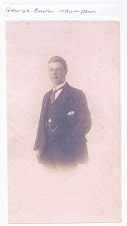
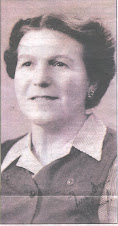
William Stephenson b. 1899 – d. 1972 and Minnie Armstrong b. 1900 – d. 1989

It became apparent to me when typing up the family history written by my mother (Meg Stephenson), that she had not written much about my own grandfather and grandmother, probably because at the time that was not history but a current situation. I can attempt to tell some of the story with my own memories, and stories which were told when I was a child.

Minnie was one of a family of twelve, her father was a publican and she had been born in the Bull Ring Pub on North Shields Quayside. In later years the family moved away from the quay to the Neville Hotel near the station.

Thomas Armstrong continued in the pub business all his life, eventually managing the Percy Arms in Tynemouth with his second wife. Billy Stephenson was great friends with some of Minnies brothers.


The whole Armstrong family were very talented musically, and in the 1920’s had a concert party “the Hollies” who performed in local theatres. Bill Stephenson was part of this concert party too.

Billy and Minnie married in 1926, and had their first child, George, the following year. Minnie was a very small woman, and the story is that he was the first baby to be delivered by caesarean section at the Royal Jubilee Infirmary in North Shields After the birth she must have been very weak, however she was very soon pregnant again, and George was given to Billy’s mother Kate, and sister Alice to be looked after, whilst Minnie’s second pregnancy advanced. It seems that the arrangement suited the whole family, because George was more of less permanently at his grandmothers house for several years.

The second son Billy was born when the family lived at Tyne Dock, and last a daughter was born, Catherine.

In the thirties Billy and Minnie were given the tenancy of the Fountain Head Public House on Bedford Street in North Shields but Billy lost the tenancy in 1943 and the family moved to Kirten Park Terrace. The house was number 13, so they called it “Broomhaugh” to stop it being unlucky. During the war the children were evacuated and young Billy submitted his memories of that time to the BBC peoples war project. You can read about it here http://www.bbc.co.uk/ww2peopleswar/stories/02/a3282202.shtml
After Bill lost the tenancy of the Fountain Head, he went back to working in the ship yards. It was hard work, and ruined his health – my memories of him at the beginning of the sixties were when he was semi retired, I was never sure what he did, but he often brought a pail of prawns, or some live crabs home, so I guess he worked casually down round the fish quay.

He went everywhere on his bike, and used to pedal me to ballet lessons with me sitting on the crossbar. He would sometimes collect us from Sunday school too, and take us home past Appleby Park, North Shields FC grounds. We would pop into visit the caretaker – a friend of his - who had a small sweet shop, and get cinder toffee so we could ruin our Sunday lunch.

He became very ill, and was bed ridden. We were at the house every day, but we children very often did not visit him,. and stayed in the back room, whilst our parents sat with him. He seemed to take a long time dying, and my grandmother, Minnie, missed him terribly. Her sister, Auntie Barbara, moved in and they slept together in the big bed for many years, as Minnie could not sleep alone.

Minnie and Billy’s children prospered. Cathy married Stan Burdon and emigrated to Australia in the sixties. They had Stephen and Caroline. Minnie visited her twice. George had one failed marriage then settled with Shiela Potts, and had three children, Catherine, Micheal and Jamie. Billy married Meg Thompson and Jane Penny and Philip were born.

Stephensons Chapter 12 - Hudson (Jr) b. 1900 - d.1936

Slightly younger than Bill Stephenson, Hudson Junior was the baby of the family. He had pneumonia when they lived at 58 Bedford Terrace and was always considered delicate. Because of this George (the Greek) helped him get outside jobs at first, Fieldsman at the Cricket Field, etc. Then he was billiards boy at the Conservative club. A Mr Todd was also there and between them they ran the conservative club very well. Mr Todd wanted to buy the tenancy of a large public house, the Five Bridges, at Darlington but needed Hudson to help him, as it was too big for Mr Todd alone.
Hudson was a great guy, full of fun and a very natty dresser, very popular with all the young lads of the neighbourhood. Walter Armstrong was one of his mates and had endless stories of a;; the scrapes and practical jokes they got up to, such as Hudson treating all his pals to pies and peas and running off just as they were served out with all his pals running pell-mell after him as none of them had any money. The poor proprietor had 8 or 9 portions for pies and peas left on his hands.
Hudson always had big ideas and ran a big motor bike, a Douglas, and gave rides to a couple of pals at a time, one on the pillion and one on the fuel tank. Hudson fell for Mr Todd’s beautiful daughter Violet, and because she had big ideas his pockets were usually empty. He solved this by taking his mothers paintings and selling them to make ends meet. Violet had not really thought about him as a possible suitor until Hudson’s mother Kate got her inheritance, and then it was a different story.
They got married and went to the Five Bridges. Hudson finally got sick of all his in laws telling him what to do so he came home and Kate helped him buy the tenancy of the Briar Dene Pub along the links at Whitley Bay. It was well out of town in those days, and very run down. Irene Stewart went along every day to help him get it put straight. Violet didn’t want to leave Darlington and her family. She had a baby, Barry, and disgusted the family by arriving with a nurse in full uniform to carry Baby Barry, the nurse walking behind her, and with Violet dressed to kill.
She wouldn’t work in the pub and when her mother and sister arrived they just sat about all day drinking coffee. Irene wouldn’t go along to work for Hudson if they were not working too, so the work was not getting done.
There were rows and more rows. Violet wanted to go back to Darlington with her mother. She had not realised she would have to pitch in and work when she married Hudson, after all, his mother was rich! Hudson began to drink heavily, and Violet began an affair with Selwyn Dixon. Hudson finally blew his top, took some money and left. There was nothing out of order in the pub, it had been going well, but he had had enough. He left in 1936 – presumably leaving Violet in charge of the pub. He went to London in a very depressed frame of mind. He must not have known what to do so he committed suicide by jumping off one of London’s Bridges and drowning in the Thames.
Bill, his brother went down with a friend to identify the body, in the greatest distress. All the family laid the blame for Hudson’s suicide firmly at Violets door and never had anything more to do with either her or Barry.
Violet married Selwyn Dixon and eventually took the tenancy of the Robin Hood Inn at Merton, New York. She must have had to work then whether she liked it or not.
Hudson looked very like Bill’s son George, and had similar mannerisms too. His son Barry was all Todd, but one of his sons has all the Stephenson looks.
The family always said if Hudson had married Minnie instead of Violet he would have been a rich man, because they were both such good workers.
Meg Stephenson in 1987


The Briar Dene Public House now – in a prime location on Whitley Bay Links

Chapter 13

Stephensons Chapter 11 - Alice Maud b. 1897 - d. 1982

Kate and Hudson’s first child was Alice. Alice was a slow as Kate was quick. Her picture as a young girl shows her very pretty but she dressed plainly, walked in a slouched clumsy fashion and had very little grace.
She could not do anything right and her mother had no patience with her, making matters worse. Kate pushed her out of the way more often than not, so Alice had no chance to learn and become any better at household tasks. Truth to tell she never had any liking for housework and maybe hadn’t the inclination to learn any of the skills.
She worked in for a time in Dickinson’s fruit shop and tried to learn to be a florist but she did not work all that long and never earned a living for herself.
Her brothers always made fun of her and “put her down” when she had her hair fashionably bobbed her mother shrieked that she “looked a sight!” and indeed the new hair style didn’t suit her or her type of baby fine hair. Her face looked plainer than ever.
She became more and more lazy, preferring to sit working away at the beautiful fancy work which she and her mother were brilliant at. She must have had some intelligence because she could work the most intricate patterns in wool; knitting or crochet. As she sat working away “the ashes were meeting people as they came in the door”
She loved to go to a half cousin of hers, Mary Galley, who had a wet fish shop in South Shields, Ocean road.
The men came in droves after the pubs shut for oysters, prawns brown bread and coffee. The café and shop was a lively place to go, away from her mothers eagle eye, and Alice worked for nothing. It was a pleasure to get away from her domineering mother with her caustic tongue.
The shop had a reputation as a bit of a shady place, the ladies of the town knew where they could go to get customers when the pubs closed, but Alice would not be aware of that.
She was a devoted Christian, The church was her real love. She had no boy friends nor did she seem to want any. She was very fond of her brothers friend Leonard and he with her but it was only friendship as the jeers of her brothers prevented it being anything else.
When all the family gradually died leaving her brother Bill as her only relation instead of becoming closer they had endless quarrels. Bill Stephenson had been left nothing in his mothers will because he already had had his share when she had been alive, so everything went to Alice. That didn’t stop him continually hounding Alice for “subs” which he thought she could easily afford and which he felt he had a perfect right to anyway.
Alice was stubborn. She knew the money (which was not a large amount) had to last her lifetime. She was careful and her savings grew to quite a tidy sum; the stocks and shares which Bill wanted her to sell when her mother died brought in a decent income. Bill had always been a drinker and Alice didn’t want her money to vanish into the nearest pub.
When 11 Kirton Park Terrace came up for sale after the war Bill was forced to buy it or get out. He had no money for the deposit so Alice had to dig deep into the funds. This she did, very grudgingly, knowing that Bill had had money enough only a few years before when he left the Fountain Head, but had spent it all.
Alice had a friend in a beautiful house on the Broadway, Mrs Littlefair, of Red Gables. Alice gave the greedy woman anything she fancied out of her house (at Jackson Street) counting it an honour that the woman was her friend. This infuriated Bill and Minnie to see so many family possessions given away, especially when they knew Mrs Littlefair told everyone Alice was her daily woman. Alice who hated housework would go regularly to clean Red Gables, so she looked like the cleaning woman,. Polishing windows for everyone to see, but of course she hardly got a cup of tea for her pains!
Later when Mrs Littlefair died Alice became very friendly with Maggie Pickering, her sister in law’s cousin, and they went on two or three holidays a year together. These were happy times for Alice; Maggie was very good company, but she in turn went to live with her daughter away from the district and Alice was left again.
While her mother was alive she joined in all the help Kate gave Minnie and Bill and the children, knitting beautiful jumpers, woollens and swimming costumes (which reached the ankles when wet) She took all the children to every pantomime in the area every Christmas, and took them on numerous outings by bus and train. When they grew up and her mother died she spent every public holiday at “Broomhaugh”. Christmas, Easter, Whitsun and August Bank Holiday.
In later life she needed eye operations, and recuperated at “Broomhaugh” - Kirton Park Terrace - for months at a time. Because it was her money that had gone towards paying for the house she must have thought it was partly hers. (when she was senile she told everyone it was hers!)
Gradually her friends in the church died and she really was left alone. All she had was her brother, with whom she argued all the time, her sister in law who was kind to her, and her nieces, nephews and grand nieces and nephews. Her nephew George, and his wife and family were her favourites, but they lived a long way away, and Cathie, another favourite was even further away, in Australia.
When her awful parrot died, a present her brother George had brought her from is sea journeys before WW1 it seemed to be the last straw and she broke her heart that day. It was the last link with all the family and friends she had known and loved and the happy times she had had at 8 Jackson Street, when the house was full of lively jolly people. She died in 1980 aged 85 years.
Meg Stephenson in 1987


Chapter 12

Stephensons Chapter 10 - George (b.1989 - d. 1918)

Kates Son George, Adopted son Leonard, and others.

George was a seaman and on one leave brought an orphan boy Leonard Key home with him. He said he never had any place to go when he was on leave and could he come home with him? It was a small flat in Belford Tce with six people already living there but he was warmly welcomed. George was drowned at sea in the first world war, 1916, so Leonard became like a son, coming home to Kate for all his leaves, and taking Georges place to a large degree. Kate became very fond of him.
An important thing happened when young George was lost – Kate became reconciled with her father and from then on her fortunes began to change. Most of Georges children still living had left home and didn’t really want to be bothered with him, he wasn’t a very nice person. He needed someone to look after him in his old age – Kate.
He bought her a house in Jackson Street, No 8. he moved in round the corner at No. 1 Park Crescent. He helped her financially, giving her stocks and shares, helping to make the house comfortable, good furniture, lovely picture and ornaments.
He was the first man, or one of the first men, to have a motor car in North Shields, anyone in the family, any neighbour or any employee could borrow the motor car for an important event – a burial or a wedding, with a GBP5 note thrown in! Stepha the Greek definitely mellowed and became more generous in old age!
When he died he left Kate GBP3,000 and stocks and shares, and the house they lived in so Kate and Hudson became rich at last.
They fell out with Uncle Billy – Georges younger son, who left all his money to his mistress Sally Kirkland. If that hadn’t happened they would have been richer still.
Still all the family had very happy times at Jackson street, Leonard came there when he was on leave. Kate was always ready to go out dancing with her son Bill, to Whist drives or have a party at home. There was always a welcome for anyone who cared to call.
One of these was a cousin, Alfie Stephenson. His father must have been a brother of William and George. He went to sea where he lost one of his legs, after the wooden replacement was fitted his nickname became Peg leg. He was a frequent visitor at Kate’s, also going round to the fountain Head Pub where Kate’s son Bill was the tenant. When he died Bill was determined to have Alfie’s clock – a very pretty chiming clock he had brought home from one of his trips – Minnie and Jimmy Armstrong went from the Fountain Head to his house in Stephenson Street. It was very dirty and before leaving Jimmy, who was always immaculate, stirred the curtains round the bed with his walking stick. They carried the clock home with great delight, but found they had brought another addition – They were covered in fleas!
The clock is at 12 Ingleside Road and still has a very pretty chime – but no fleas!
Meg Stephenson in 1987


Death Certificate of George Stephenson 1918
He was killed when the Glenart Castle was torpedoed in 1918


Leonard Key was also lost at sea – in WW2.

He was a cook on the SS DEPTFORD. Built in 1931 by Smith's Dock Co. The ship was steaming from from Kirkenes to England under the command of captain Furguson with a cargo of iron ore. She was torpedoed by a German submarine U 38 at 1 p.m. on December 13th, 1939, N.W. of Honningsvaag Lighthouse at Stadt, Norway. The vessel sank immediately and out of her crew of 35 there were only five survivors. Four men were picked up by the steamship Firda, and another three by the steamship Nordnorge, but two died shortly after they were taken on board. Capt. Ferguson was lost with the vessel. The Deptford was not in convoy at the time of the sinking.


This picture is thought to be of Uncle Alfie – he of the chiming clock! The legend on the photo dates it as 1900, however it could be as much as 20 years later.


Chapter 11

Stephensons Chapter 9 - Kate and Hudson

(Catherine b.1867 – d.1945) And (Hudson b.1866 – d.1936)

Kate finally came home from boarding school a beautiful young lady but was simply used as a “Mothers Help” in her fathers house in Coach Lane (on the right going down). They moved next door to another Stephenson on the fish quay, Peter, a very distant relative. These were house numbers 6 and 8.
I would like to say that her father’s wife was a wicked stepmother but that was not the case. George was a strict father and would not let her go to all the parties and dances Kate wished for. Her step mother was a sweet kind lady who helped her dress and sneak out to dances on many occasions. Kate was vivacious, high spirited, a lovely dancer enjoying life to the full, In the social round she met her cousin once more, handsome Hudson, son of William.
He was an attractive man about town. An excellent swimmer, a member of Holy Trinity Church choir, but most of all a prominent and active member of North Shields Cycling club, Headquarters Hylton Lodge, Lovaine Place. A more dashing and debonair group of young blades you could never find. Kate and Hudson fell madly in love.
Father George didn’t like, didn’t approve of Hudson and anyway they were cousins – not a good thing as far as marriage and children were concerned. He forbade the wedding, The young couple eloped through the fields to Tynemouth and were married in Holy Saviours Church in 1886.
Now Hudson was a gentleman. Too much of a gentleman to go into his fathers business on the Quay among the fish, no matter how prosperous. He became a “Hatter” and went into the men’s outfitters trade. He didn’t make much money and as Kate’s father had stopped speaking to them they had many hard times when they were young.
They lived at 58 Bedford Terrace and were married some years before they had Alice Maude (B1895), George (1897) William (1898) and Hudson (1900).
Kate worked hard to keep the family respectable, cobbling the boys boots herself, making clothes, knitting, crocheting, embroidery, all beautiful work.
William, Hudson’s father had finally put him into business for himself, a drapers shop in Union Street, but unfortunately it seems he was not a good businessman and it failed, he went bankrupt. He eventually became a floor walker at Murtons in Newcastle, always beautifully dressed with a flower in his buttonhole. It was a very high class store and he certainly was a high class gent, but after leaving the train at north shields on his way home from work, Kate had to wait until he had visited two or three public houses on his way home before she could give him his dinner. He quite often was slightly drunk , bowing to lampposts when he bumped into them, apologising and doffing his hat. He was always quietly spoken, a gentle person, patiently waiting until Kate had finished shouting at him when everything was too much for her. He would simply go into the front room and play hymns on the piano.
They were very patriotic, devoted to the royal family., One of Hudson’s favourite things was a flag pole in the front garden. (a very small garden with a very large flag). On Empire day, the King’s birthday, or any important event Hudson had all the neighbourhood children lined up saluting the flag.
In later years they went on holiday to their favourite place, Rothbury in Northumberland, where they walked their favourite walks a hundred times over.
Their house was always the centre of fun and parties both at Belford Terrace and a 8 Jackson Street where they eventually moved. They loved each other devotedly.
Meg Stephenson in 1987


A copy of Hudson Stephenson’s indenture papers – he qualified as a Draper in 1886

Kate and Hudson had four children:

Alice Maud (b. 1895 – d. 1980) never married and spent much of her life as companion to her mother.
George (b. 1898 – d. 1918) was drowned in WW1.
William (b.1899 – d. 1972) married Minnie Armstrong and had three children
Hudson (b. 1904 – d. 1936) married Violet Todd in 1930 and had one son, Barry James (b. 1932).

The end of Kate’s Story.

Hudson Senior died about the same time as Hudson Junior in 1936, aged 70 years. The second world war began and with it came the loss of Leonard, drowned at sea.
These were all devastating blows and Kate was broken hearted. She rallied enough to help her son Bill get the tenancy of the Fountain Head in North Shields, but when he lost the tenancy of that she seemed to lose heart.
She died January 1945, aged 78 years.
Meg Stephenson in 1987

Chapter 10

Stephensons Chapter 8 - The children of George (b.1845)

George had a very large family: In addition to Kate, born to his first wife Sarah Jane Farrell, he had seven children with his second wife Margaret Ann Smart.

Offspring of Georges first marriage:
1 Catherine Alice (b. 1867)

“Kate” was sent to live with her maternal grandmother in the East end of North Shields. She ran wild, playing with all the ragamuffins on the quay
George came home from time to time. The first trip was when Kate was only 4 years old, He took her out and when she was brought back home there was blood on the lace collar of her frock. He had had her ears pierced and she was wearing diamond earrings.
On another trip home he found Kate running bare foot among all the fish guts on the quay. He promptly sent her to boarding school in Darlington (Thornbeck House, Darlington)

Meg Stephenson in 1987


Children of Georges Second Marriage:

Sarah Smart (b.1875 in Constantinople). Sarah was nineteen years old when she married George Herbert Grey in 1894. I have not been able to find out much more about her life.
John Smart (b. 1878 in Constantinople) In 1926 at the age of 48, after he returned from several years in Canada, he married Isabella Turnball. They had no children. Meg Stephenson wrote about him.

John Smart Stephenson
Georges elder son Jack had been a bad lad and always on the booze so had been sent to Canada. He came back and married later and elderly lady, one of the Turnbull sisters, who had a milliners shop in Bedford street They had no family .

Meg Stephenson in 1987


Elizabeth Smart (b.1881 in Constantinople) may have married a man called Davidson.
Ellen Smart (b. 1883 in North Shields) was 20 in 1903 when she married Alfred Tate.
Rose Ann Smart (b.1884 in North Shields) was 27 in 1911 when she married David Perry.
Florence Smart (b.1887 in North Shields d. 1909 in Northumberland). She was 21 years old when she died.
William Smart (b. 1894 in North Shields d. 1943 in North Shields). Never married and was killed in an Air Raid in WW2. he died without children. Meg Stephenson wrote about him.


William Smart Stephenson
Billy never married and was killed in an air raid in 1943. He was very involved in the business and his nephew and name sake Bill Stephenson always wanted him, Uncle Billy, to set him up in business on the fish quay. Uncle considered him too flighty, untrustworthy and a heavy drinker so never did what young Bill wanted. He was a means and horrible man, but he might have had a point there. Uncle Billy had a mistress called Sally Kirkland and when he was killed he left everything to her, except for a handsome diamond ring (a mans ring) which he left to young Bill. When it was handed over by the solicitor a piece of rock crystal had been substituted for the diamond. All the claws were crooked, it had been altered very crudely by Sally or one of her relatives themselves.
When Young Bill himself died, it was offered to his son, George, who refused it whereupon Billy’s widow Minnie sold it to a man at the door for GBP4. She said she needed the money, though the gold in the ring was worth a great deal more than that. (the fact that she had more than GBP800 in cash hidden in the house 2 years later when she paid for her air fare to Australia is beside the point.)
Irene Stewart always said that Stephenson money never brought anyone any happiness as it was made originally by illegal means.
Now that the stocks and shares left by Kate have all been sold and the ring is no longer with us maybe the bad luck will have evaporated.

Meg Stephenson in 1987

Chapter 9

Stephensons Chapter 7 - the children of William (b. 1831)

William and Sarah had a big family, although not all of the children survived infancy. The children were:

Matthew Warrier b. 1854 died in his first year.


John W (b.1856) married Hannah Isabella Hodgson in 1880, and had five children. He worked as a steam boat fisherman. In the 1881 census Isabella Stephenson (born South Shields, Co. Durham) lived next door to William and Sarah in Trinity street and was recorded as a seamans wife. Isabella was known as Bel. In later years the family lived in Middle Street. John drowned in the Tyne in 1815, the same night his first grandchild was born. It was thought he had been celebrating, and tried to take his small boat across the river from South Shields.


Eleanor (b. 1858) Married Robert Routledge (b. 1856) in 1877. They had two daughters Lily (b. 1881) and Ethel b. (1882) . In the 1901 census Eleanor was living with her mother Sarah, with her two daughters and described as a widow. She was working as a nurse sister. It would appear from this that Robert died prior to 1901. She later spent many years in Canada, and travelled with her married daughter Lily Stewart.


James (b. 1860) married Maria and had six children. He was a steamboat man on the 1891 census.


George (b.1864) married Mary J Charlton in 1882. They had at least two sons, William (b. 1886) and Hudson (b. 1890). He was a fish salesman on the 1901 census.


Hudson (b. 1867) was a tailor and hatter. He married his half cousin Catherine Stephenson in 1892. and is my great grandfather. I will include more about this family later.


Sarah Louise (b. 1869 – d. 1880)
William (b.1871 - d. 1872)
Elizabeth (b.1873 -d. 1873 )

Sarah Hudson was always referred to as “the Ganny” in later years. The whole family lived in Ivy house at the bottom of Vicarage Street, opposite the Vicarage. The house s still there. One of the bay windows fronts onto Waterville road. There is a shop next to it that Ellie’s daughter had at one time, It was such a peculiar shape it was called “the flat iron”
The sons were all tearaways; always in hot water. Drink was their downfall but they were all “lovely people” – Some of their exploits didn’t sound very lovely – taking cargos of fish down to Middlesbrough, drinking the profits and coming back empty handed! However the boys were all well liked and popular with folks of all ages. The only one not lovely was the only surviving daughter , the eldest Ellie.
She went to Canada and persuaded her daughter (Irene and George Stewart’s mother) to join her leaving her children behind in the charge of their father, whom Irene and George worshipped. Irene’s mother stayed away for years and years under the influence of her mother, for which Irene never forgave her grandmother and always referred to her as “the old witch”. Irene and George’s father was a fine man and looked after them better than their mother would have done.
Meg Stephenson in 1987


From the census returns we know that in 1861 the family were registered at 10 South Street North Shields, Ten years later in 1871the family were at 9 Trinity Street, William was described as a Waterman. It was on the 1881 census where William, still at 9 Trinity street, was described as an inshore steam tug owner employing 10 men and 2 boys. In the 1891 census The family had moved to 3 Waterville new road. The house is still known as Ivy House.

William was very prosperous and generous in his prosperity.
He loaned a Mr Wood GBP 100 to start a business. It was not a pub, but in the brewery line. Mr Wood was a very shrewd man and became very rich. He bought “Star Cross” a big house in Monkseaton (now a nursing home) and Williams family were often invited for a meal in recognition of the fact that Williams money was the foundation of his fortune. On one occasion Williams grandsons wife Minnie took baby George still in nappies and without the benefit of waterproof panties. Minnie was terrified George would stain the beautiful pure white carpet in the lounge.
William was well loved in the community, as his obituary shows

“A typical steamboat man, having been brought up among the tugs all his life, Thrifty and enterprising, though his own exertions raised himself to a position of comparative independence ……. Owner of several large tug steamers……….” ”Stephey” was genial. Full of fun, seldom out of temper, seldom without a smile on his face…. 20 carriages turned out and over 200 steamboat men and friends followed the remains to Preston Cemetery, with a huge crowd at the graveside. Upright and conscientious in all his business transactions, successful as he was he remained in harness to the last until ill health compelled his absence from the busy fish quay and he ceased to superintend the working of the fleet of line and trawl boats which owed their existence in great part to his ability and knowledge of the trade.”
Meg Stephenson in 1987

William died in 1892 and in the census of 1901 Sarah was still living at Ivy House, she was now 70.


The end of Sarah’s Story
William died in 1892. As his obituary states he was a prosperous man, and he had Jim Jack and George to carry on the business. His brother, Stepha the Greek ad different ideas, however. He persuaded Sarah, the widow, to sell him the fleet for nothing like it was worth, and the poor sons were kept out of the business. George set up as “Smart and Stephenson” and prospered even more than he had before.
Poor Sarah kept her money, golden guineas, tied up in baby’s bootees in the folds of the curtains draped around her tester bed but every time she went for a few she found more and more missing, taken by her children – maybe they thought it was their inheritance, I don’t know. The fact remains that William, the best of men, and also shrewd and prosperous, hardworking, honest and liked by all, left his widow and children in not very prosperous circumstances in the end. It is said that Sarah became an alcoholic. Georges family reaped all the financial rewards.
Meg Stephenson in 1987

Chapter 8

Stephensons Chapter 6 - Steamboatmen


The census returns and marriage certificates begin to build up a picture of the family, and their links to the river Tyne.

In 1851 William Stephenson (b. 1901) was listed as a Steam boat owner, by 1861 Marthew Wharrier, Williams father-in-law by his first wife, is also listed as a steam boat owner. How did they manage to buy steam tugs, and how much did a tug cost? The extract below shows that small tugs could be purchased for a few hundred pounds, but as William and Matthew had earlier both been described as husbandmen and labourers, they must have had to work very hard to get the money together for their first steam boats.


EXTRACTS FROM THE GRAND JUNCTION CANAL COMPANY MINUTE BOOKS

PRO RAIL 830/12

13.1.1852 193.

The Committee took into their consideration the question of steam haulage on the canal on Mr Inshaw’s plan and the reports of Mr Lake and Mr Morris. The following motion was made by Mr William Fane deSalis Esq., “That the subject of steam haulage be referred to the Traffic Committee and that they have the authority to order a single tug, it being understood that the cost of such a tug is not to exceed £500. An amendment was proposed by Mr deSalis “to the Traffic Committee, that they ascertain what terms the brickmakers will contract to pay for haulage simply whether by steam or by horse power and to report also the cost of a steam tug and the model of building same.”

William’s Second wife Sarah Riggs, could not have had much money either, although her father was a trained cabinet maker, according to her christening record she was born in Milburn Place in Chirton, not a wealthy area. In addition her father died before her marriage to William, so any inheritance would have been shared between herself and her brother before her marriage.

Nevertheless Wiliam Stephenson and Matthew Wharrier both became steam boat owners in their later years, possibly both their sons were willing to operate the boats for them, and build up the fleet. Matthews son, George was a steam boat master, and William was a steam boat man in the 1951 census.
The father of Sarah Hudson who married William Stephenson (b 1831) was a labourer and Streamboat man, his son was an engineer. We already know that William (b.1801) married two of his daughters, first Mary Ann in 1856 and then after she died Eleanor (Ellen) to John Edward Nesbitt, a boat builder.
The final marriage was that of George (b. 1845) to Margaret Ann Smart. Margaret Ann’s father was a very successful man, and once George took over the business in the 1890’s he went into partnership with him, and formed the company Stephenson Smart. They operated very streamlined tugs, and had a large fleet.

zondag 18 oktober 2009

Stephensons Chapter 5 - Forging Alliances

To find out about the marriage of Sarah Riggs and William Stephenson we will need to move forward in time.
There was a big age difference between the two sons of William (b. 1801). His oldest son, William was twenty two when he married Sarah Hudson in at St Hilda’s Church, South Shields on September 13, 1853. George would have been a nine year old schoolboy at the time.


Sarah Hudson’s father was a steamboat man, as was William, but on this document William Senior was recorded as a grocer, a move away from husbandman, mariner, labourer or Steam Boat Owner.

Why did they marry in South Shields? The township of North Shields was expanding rapidly, and by the 1850’s Christ Church could not manage the volume of ceremonies so it was quite common for couples to take the ferry across the Tyne to the south bank to marry. With further research I discovered that Sarah and Williams’ first child, Matthew Wharrier Stephenson was born in January 1854, only four months after they married – so its possible that a quick wedding had been highly desirable.

Just over two weeks later, on September 29, 1853, Williams father, William (b. 1801) married Sarah Riggs in the same church! Why did they wait so long to marry? I have no idea. Sarah was thirty six years old when they married and had already had at least two children with William. I can find no evidence of a previous marriage for Sarah, and William had been a widower for fourteen years before this marriage.


I have also not been able to find christening records in Tynemouth Parish for Sarah and Williams children Sarah Stevenson and George. It may have been they were christened at St Hilda’s in South Shields, but I have not been able to access the parish records listing christenings to look for them.

Sarah Riggs parents Robert and Ruth Ann had two other children, Richard Charlton (b.1819), and Elizabeth (b. 1822) Elizabeth married John Scott and had seven children, one of whom, Mary Jane (b.1852) married Nathaniel Galley and was the mother of Mary Galley as mentioned in Meg Stephenson’s family history, written in 1987.

Richard Charlton Riggs married first Mary Brazil and had at least eight children before her death in 1867, than he married Anne Schofield and another child was born.

But I digress slightly, and coming back to the Stephenson family, father William had several daughters to provide for. In 1856 Mary Ann Stephenson married John Edward Nesbitt. She was twenty years old. John Nesbitt was a boat builder, and on their marriage certificate William Stephenson was described as a ship owner.

Mary Ann and John had three children, John, David and Mary Ann. On the 1861 census they lived on Commercial Road South Shields, and John was described as a boat builder. In 1863 their last child was born, Mary Ann. She only lived a few months, and sadly, her mother, Mary Ann, died too – leaving John widower with two sons.


Within two years he had married again, this time Mary Ann’s sister Eleanor (Ellen) Stephenson. She was twenty seven. On this marriage certificate Ellens father William was described as a merchant. Was William trying to keep John Nesbitts boat building skills in the family by ensuring he married not one but two of his daughters? A boat builder would be a very useful ally to a ship owner. Sadly within a year of this marriage Ellen was dead, so the two time widower married again, and spent some time in China, before coming back to South Shields.

Elizabeth, William’s eldest daughter from his first marriage to Eleanor Davison Wharrier, Spent most of her childhood living with her maternal Grandfather Matthew Davison Wharrier, on Quality Row, Percy Banks, Chirton. Living next door was a family named Hills. Joseph and Elizabeth Hills had a son Stephen Hills. Stephen and Elizabeth Stephenson married when Elizabeth was twenty-three, and moved to Elswick in Newcastle where Stephen worked as a forgeman.

George (b. 1845), William son from his second marriage to Sarah Riggs,, married Sarah Jane Farrell in April 1866. They had a daughter Catherine one year later, then Sarah Jane became pregnant again, but she died in childbirth in 1868, and the baby died a few months later.


Sarah Jane Farrell’s death, and that of her new born baby, was the start of a sad time for George. The next year his mother, Sarah Riggs passed away, at the comparatively young age of 52, and in 1871 Georges father William also died, at home in Coble Dene.


William had been many things in his life, grandson of the third son of a tenant farmer, he used his strength and natural wit to carve a successful life for himself in a time of great change. The fast developing North Shields, and the technological changes which characterised the 19th century created a perfect environment for him to prosper. He changed jobs from husbandman, labourer and mariner, to becoming a steam ship owner and merchant. On Georges marriage certificate he described himself as a “gentleman” and as he was then sixty four years of age, deserved the retirement and status, after a life of hard work impacted by tragedy as he lost not only his first wife to an decease which was incurable at the time, but also the loss of several of his children. His prosperity could also be measured in the survival and success of his two sons William and George.

When Sarah Jane died, Catherine was left motherless, and lived with her maternal grandparents first in Bird street, and later in Charlotte street. George worked for Vickers Armstrong and was sent out to Constantinople as an envoy for the company there. He remarried in Turkey to Margaret Ann Smart, they had seven children, the first three were born in Turkey, and the last four in North Shields.

George Stephenson b. 1845
While he was away he prospered greatly, becoming a junior partner with Mr Smart but also rumoured to be gun running to Turkey. He came back rich, nicknamed “Stepha the Greek” on the Quay because of his past connections.
He was away from home twenty years in all, and though prosperous he was not well liked, not popular among any of the men on the quay, owners and employees alike.
He was not a nice man.
Meg Stephenson in 1987

I can find no marriage for Sarah Stevenson Riggs or for John Stephenson, the last child of William and Sarah. Records for these two children are sparse; I may have found Sarah on the 1861 census working as a general servant for a Scottish family named Murray in St John, Westgate Newcastle. In the same census John (aged 16) was living with his father and mother in Brunswick Place in Chirton, North Shields. I have no other record of his existence.

Chapter 6

Stephensons Chapter 4 - A Wife and Children

William and Eleanors first child, a son, William was born in 1831 at Whitehill Point, North Shields, and was baptised on 23 October – the records are extracted from the Tynemouth Parish Register . He had three siblings:
Elizabeth, born 1834 at Milbourn Place and baptised Dec 21, 1834
Mary Ann, born 1836 at Milbourn Place and baptised June10, 1836,
Elenor born 23 dec1837 at Coble Dean and baptised Feb 14, 1838.
William was noted as a husbandman on William, Elizabeth and Eleanor’s baptism records, but on the baptism record of Mary Ann he was noted as a Mariner, which was an interesting diversion.
The streets where the family lived are long gone now, hidden by the building of Tyne Commissioners Quay and the Albert Edward Dock, but they must have been simple houses, and of necessity close to Williams work.


Eleanor Davison Wharrier was the daughter of Matthew Wharrier b. 1791 and she had a brother George b.1817. Their father, Matthew was born in Bothal in Northumberland, where the Wharrier family have lived for hundreds of years. He moved south to the Tyne however, and was first listed as a Husbandman, and later as a labourer on the census returns of 1851. By the 1861 census he was also a Steamship Owner.
It is possible that William Stephenson (b.1801) and Matthew Wharrier worked together in Tyneside as husbandmen, perhaps with the dray animals who moved the coal wagons from the pits down to the coal staithes before steam engines were installed.
Eleanor Davison Wharrier was born in 1813, and having given birth to four children during her marriage to William Stephenson, died at the age of 26 of smallpox. She was buried on the 9th January 1839 at Tynemouth cemetery.


The young family were scattered but we can find them on the 1841 census all in the township of Chirton. William aged 9 is living with his grandfather and grandmother Mathew and Elizabeth Wharrier.
Mary Ann aged 5 and Ellen aged 3 are living with their grandparents William Stephenson (1780) and Ann Stephenson (1780) at Whitehill Point, Chirton. In this house is a William Stephenson but his age is given as 30 and he is a coal miner. Elizabeth Stephenson aged 7 is also in Chirton but living with Thomas and Elizabeth Coates. They have a daughter Frances Coates who had married little Elizabeth’s uncle George Wharrier (b. 1817) in 1840. George and Frances are living at Milbourn Place, Chirton.

By the time of the 1851 census William Stephenson (b. 1801) and Sarah Riggs are living as man and wife at Lime Kiln Shore, Chirton. William is now a steam boat owner. He has his daughter Eleanor (b. 1838) from his first marriage living with him, two of his other children William and Elizabeth being at their grandparents , the Wharriers. He also has another two children Sarah aged 7 (b. 1843) and George aged 5 (b. 1845). Although I can find a birth for George as the son of William and his second wife Sarah , Sarah’s birth certificate names her as Sarah Stevenson Riggs, father unknown. I think there was an attempt to give her the Stephenson name, but it must have been known that her parents were not at that time married.
Note on the birth certificate of George in 1845 his father is listed as a labourer – six years later he was a steam boat owner.


Chapter 5

Stephensons Chapter 3 - Married in Tynemouth Parish

In the 1851 Census William was married to Sarah which verified the family history originally set out by Meg Stephenson in 1987:


This story was recorded by Meg Stephenson All the information given is verbatim through Irene Stewart. All opinions are hers but she did call “a spade a spade”. Meg recorded them in good faith

Once upon a time there were two brothers
William Stephenson (1832 – 1892 died aged 60 years) and
George Stephenson (1845 – 1925 died aged 80 years)

Their father William was described as a “gentleman” (on Georges marriage lines). He must have had a bit of money because both brothers were in business on the fish quay, north shields and maybe the money to start them off came from the father. Their mother was called Sarah Riggs according to a sketchy family tree drawn up to prove Kate Stephenson’s family connection to “granny Garfitt” from whom she inherited money. Mrs Garfitt is prominent in a lot of the photographs. (Another relation of Mrs Garfitt, Mary Galley, who had a wet fish shop in South Shields got nothing, in fact Kate did not even inform her of Mrs Garfitts death till Kate and her daughter had cleared the house of any valuables)
Meg Stephenson in 1987

I had a great problem for many months in that I could find neither a marriage record for William Stephenson and Sarah Riggs, or the birth record of Williams elder son, William Stephenson (born 1831). In addition, the 1851 Census gave Sarah’s birth date as 1817 – much to young to have given birth to William, so Sarah was probably William’s second wife.

Finally, after getting access to a great website which has scanned copies of original parish records for many areas of Europe, I found not only an earlier marriage, but also christening records of children and the burial record of Williams first wife – Eleanor Davison Wharrier.


William and Eleanor married in Christ Church North Shields on June 5th 1831.

Chapter 4

Stephensons Chapter 2 - The move to North Shields

How did William leave Ryton and move to Chirton? These descriptions of the two townships set the scene, and give some clues:

A nineteenth century description of Ryton Parish
"This parish was anciently very extensive, and comprised the whole of Winlaton and Stella parishes, and the newly formed parish of Greenside. Census populations for Ryton were:- in 1801, 432; in 1811, 462; in 1821, 445; in 1831, 590; in 1841, 677…..
"The village of Ryton is charmingly situated upon a steep and richly wooded bank, rising from the river Tyne, seven miles west from Newcastle. A finer situation could hardly be imagined, being, as it is, surrounded by scenery of the most picturesque descriptions. The view to the north-west from the churchyard, up the Tyne valley, is equal to anything in the North. The village in itself is extremely pleasant and interesting, and possesses many fine mansions with well wooded grounds. In the centre of the village stands the picturesque village cross, bearing date 1795.
[From History, Topography and Directory of Durham, Whellan, London, 1894]

A nineteenth century description of Tynemouth Parish
"TYNEMOUTH parish is bounded on the north and west by the parishes of Earsdon, Long Benton, and Wallsend, on the south by the river Tyne, and on the east by the German Ocean. It comprises the townships of Chirton, Cullercoats, Murton or Moortown, North Shields, Preston, Tynemouth, and Whitley, whose united area is 7,222 statute acres. The population in 1801, was l4,345; in l811, 19,042; in l821, 24820; in 1831, 24,778; in 1841, 27,249; and in 1851, it had increased to 30,524 souls.
The surface is generally level, consisting of a strong soil, well suited for the growth of beans and wheat. Coal and ironstone are abundant, and the only magnesian limestone in the country is found in this parish. Three moors, known respectively by the names of Tynemouth Moor, Shire Moor, and Billy Mill Moor, and containing together an area of 1,300 acres, were divided and enclosed, under the authority of acts of parliament, obtained in the reign of George III."
[From History, Topography, and Directory of Northumberland, Whellan, 1855]

The increase in productivity in the coal mining industry at the beginning of the nineteenth century, and the fast developing Parish of Tynemouth within easy reach of Ryton by boat on a tidal river, would have offered many opportunities.
Our William (born 1801) and his siblings John and George married and had families. All their children were christened in Tynemouth parish, so it may have been that the whole family moved down from Ryton in their youth. John was a tailor, and George was a shoemaker; we can assume that William had skills that were in demand, but it was a big jump from his origins as a farm husbandman’s son to becoming a Steamship Owner in the 1851 census, what had been happening in the intervening years to make him so prosperous?

Chapter 3

Stephensons Chapter 1 - the earliest facts

I guess the place to start narrating this family history is with the earliest known fact, but for a long time I could not verify either the stories I had been told as a child about the Stephenson family or the ideas I had myself about their origins. Indeed even now; armed with what is known as fact today; this is not the start of the family history, and there will be possibilities in the future to gain access to records which at this time are not available to me.

So the earliest fact (and indeed one of the first pieces of documentation I found) was the entry on the 1851 Census relating to William Stephenson and his family. William was born in 1801 in Stephens Hall, Ryton, Co. Durham, and lived in 1851 on Lime Kiln Shore, Chirton, North Shields. William was listed as a Steamship Owner and was living with his wife Sarah, two daughters; Eleanor who was twelve years old and Sarah about eight years old; and son George who was five years old.

Stephens Hall sounded a bit posh, so I thought I would look into the history of the house; which still exists and is a listed building. It dates from around 1635 and has a very rich history. It seems the current owners began a huge restoration of the neglected property a few years ago which was partly paid for by a grant from English Heritage. During the restoration a 17th century mural was discovered above the main fireplace, which has been preserved now behind a clear plastic case. The terms of the grant from English Heritage oblige the owners to open the house to the public once a year so that visitors can view this treasure.


Stephens Hall, Ryton

But who was William? It seems he was the grandson of the first Stephenson to tenant the farm, another William! This William was born in 1735 and was canny enough to marry the widow of the previous tenant of Stephens Hall a Joseph Strawpart. Mary, (nee Stokoe c1743-1793) inherited the tenancy as Joseph Strawpart had no male heirs and on her second marriage on August 6, 1767 the tenancy passed to her new husband.

William and Mary had at least eight children, Jane b. 1768, Charles, b. 1769, Ambrose, b. 1771, John, b. 1773, Joseph, b. 1777, William b.1780, George, b. 1777 and Catherine, b.1782.

The third son William (b. 1780) was listed as a husbandman and married Ann Young of Ovingham on November 23, 1800. William and Ann had at least five children William, b. 1801, Michael, b.1804, John, b. 1806, Mary, b. 1808, and George, b. 1810.

Although this history seems very detailed, I do not have documentary evidence of any of the births or marriages, as all the information was found on internet sites. Until I can verify the dates by checking parish records physically, I cannot be certain they are correct.

Chapter 2

The Stephensons - Steamboatmen

I finally have the courage to publish this story - the Stephenson family history as I know it at this time. I say courage, because I'm still researching, and its been difficult to stop and say, "this is good enough". There are many living Stephensons who can add to this story and embellish it, for this reason I have deliberately excluded the details of their lives. I have really enjoyed researching this, and also having contact with different Stephenson families around the world who share my ancestors. You can start to read it here:

Chapter 1 - The Earliest Facts

Chapter 2 - The move to North Shields

Chapter 3 - Married in Tynemouth Parish

Chapter 4 - A Wife and Children

Chapter 5 - Forging Alliances

Chapter 6 - Steamboatmen

Chapter 7 - The children of William (b. 1831)

Chapter 8 - The children of George (b.1845)

Chapter 9 - Kate and Hudson Stephenson

Chapter 10 - George b. 1898 d. 1918

Chapter 11 - Alice Maud b. 1897 – d. 1982

Chapter 12 - Hudson Stephenson Junior 1900 – 1936

Chapter 13 - William Stephenson and Minnie Armstrong

Family Tree - The Stephensons 19th Century

Family Tree - The Stephensons 20th Century

I would like to thank Dylane Symm, Lia Stephenson, Maureen Thompson, and Lyn Thornton who helped to fill in the last gaps, and confirm some of my ideas about our origins. Last but not least I would like to thank my mother Meg for writing down everything she found out from her talks with Irene Stewart, and my dad, Bill Stephenson – an amazing raconteur.

I found these books really useful when I was trying to visualise the Tyne and North Shields in the 19th and 20th centuries
The Archive Photographs series North Shields – compiled by Eric Hollerton
The Peoples History Beyond the piers – Ron Wright
The peoples History North Shields Memories of Fish “n”Ships – Ron Wright

I did almost all of my research on the internet, and these are the websites I used
http://www.ancestry.com/
http://pilot.familysearch.org/recordsearch/start.html#start
http://www.genuki.bpears.org.uk/NBL/index.html